
Survey and Level Check
We measure the actual fall across the room before quoting. It decides the whole approach.
Flooring
Hardwood, tile and vinyl plank. In a pier and beam house most of the work happens before the first board goes down.
What We Do
Anyone can lay a floor on a flat slab. Almost no house in New Orleans has one. Pier and beam moves, joists sag, and a floor that is out by an inch across a room will telegraph through whatever you put on top of it.
We check level and structure first. If it needs sistering, shimming or a levelling compound, that is in the quote before we start, not discovered halfway through.
We also restore original heart pine where it is worth saving. In a lot of these houses the best floor in the building is already under the carpet.
Flooring is usually part of a wider remodeling job, so we quote it either on its own or as part of a full renovation.
What You Get
We measure the actual fall across the room before quoting. It decides the whole approach.
Old floor coverings out and away, with the subfloor exposed and inspected.
Sagging or damaged joists sistered, and any rot or termite damage dealt with while it is visible.
Shimming or self levelling compound so the finished floor sits flat.
Hardwood, tile or vinyl plank, laid with the expansion the material and this climate need.
Skirting, thresholds and transitions, scribed to walls that are not straight.
How It Works
The same process on every job in the New Orleans metro, whether it is one room or the whole house.
We come to the property and look at the actual house. On older New Orleans homes that means checking settling, moisture and what sits behind the plaster before anyone quotes a number.
You get flooring written down: what is included, what is not, and what could change it. No charge and no obligation.
Materials, trades and scheduling handled in house. You hear about problems the day we find them, not in a bill at the end.
We walk the finished work with you, write down anything you are not happy with, and fix it before the job is called complete.
Gallery
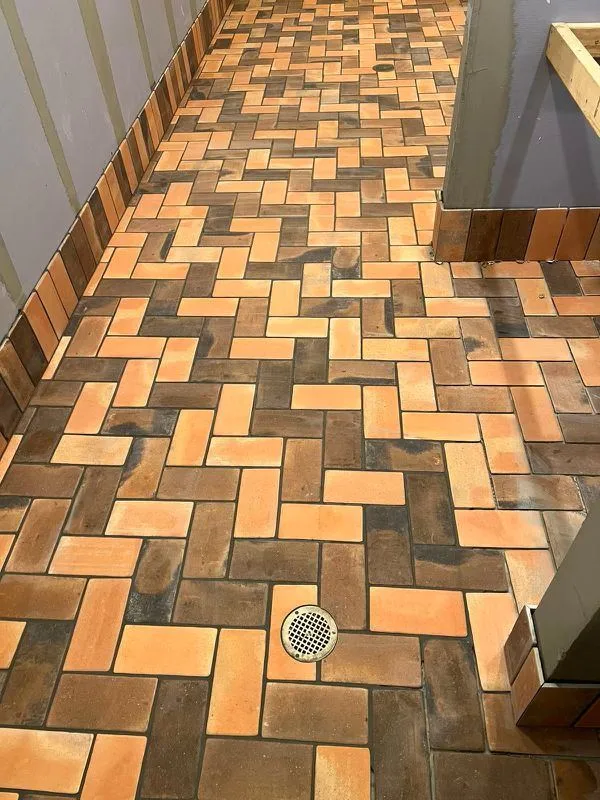
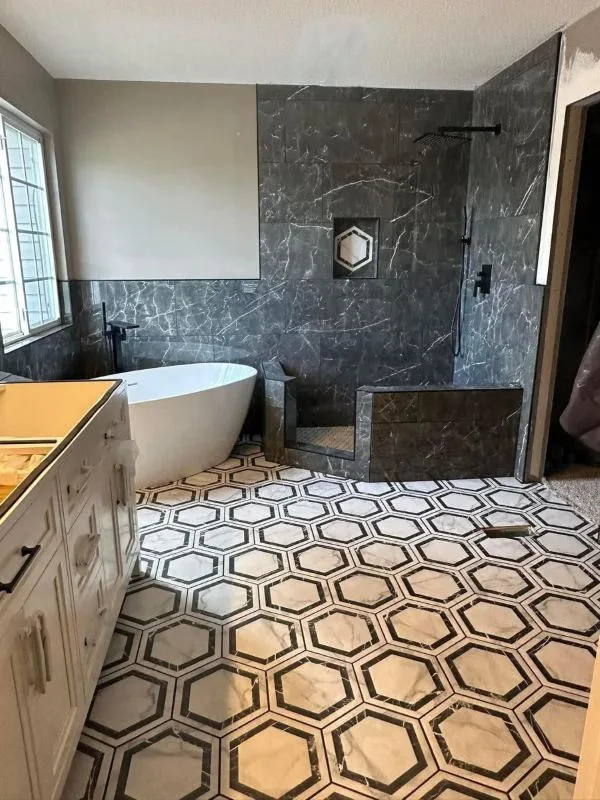
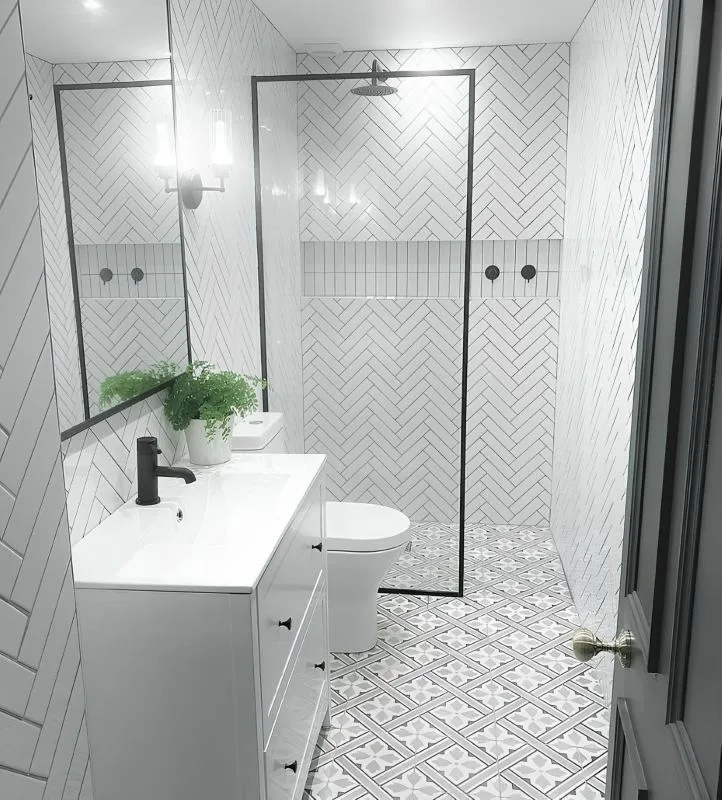
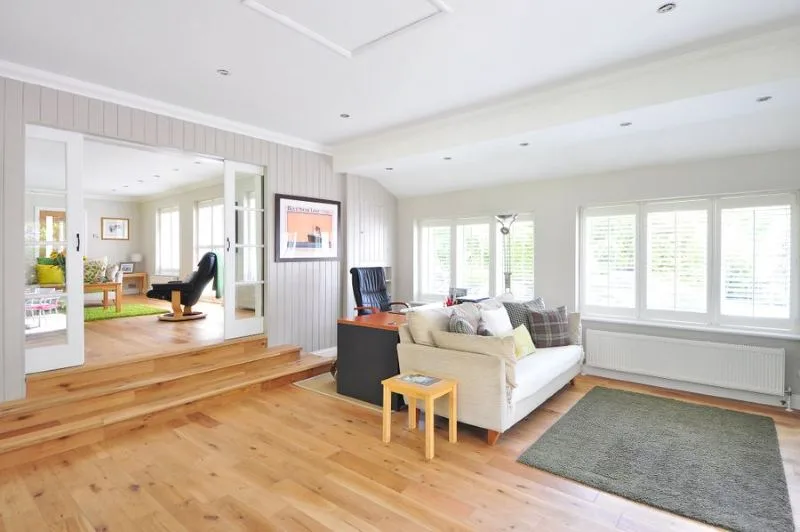
A lot of houses in this city still have original heart pine under carpet or newer flooring, and it’s usually worth checking before you rip it out and replace it. Heart pine is dense, it’s durable, and it can often be sanded and refinished even after decades of wear. If the boards are structurally sound, refinishing keeps the original floor and usually costs less than replacing it with something new.
If the original floor isn’t salvageable, or the house never had hardwood to begin with, the choice usually comes down to engineered hardwood or luxury vinyl plank. Engineered hardwood handles humidity better than solid hardwood because of how it’s layered, but it’s still a wood product, and it’s not the right call for a room that stays consistently damp. LVP handles moisture better than either wood option and holds up well in bathrooms, mudrooms, and ground floor spaces closer to grade.
Solid hardwood is still an option in the right room, but it’s the least forgiving of the three when it comes to humidity swings. In a climate where indoor humidity moves with the seasons, that’s a real factor, not a minor one, and it should shape where you use it in the house.
A squeaky floor is usually a fastener problem, not a flooring problem, and it’s often fixable without replacing anything. Boards that have loosened from the subfloor over the years can be resecured. A soft spot is a different situation entirely. Soft spots almost always mean water has reached the subfloor or the joists underneath, and new flooring laid on top of a soft spot just hides a structural problem.
In pier and beam homes, moisture from under the house is a common cause of subfloor damage that shows up as a soft or bouncy spot in the floor above it. Before you replace flooring in a room with a known soft spot, get under the house and check the joists and subfloor in that area. Replacing flooring without addressing what caused the softness means doing the job twice.
If a room has had water damage in the past, even if it looks dry now, that’s worth mentioning to your contractor before flooring gets chosen. Some materials tolerate a history of moisture better than others, and it changes which option makes sense for that specific room.
Houses built on pier and beam foundations have a crawl space underneath instead of a slab, and that space is exposed to ground moisture in a way a slab foundation isn’t. That moisture moves upward through the subfloor over time if there’s no vapor barrier down there. A vapor barrier under the house is a small job that protects a much bigger investment in new flooring above it.
This is also why solid hardwood is a tougher call in a pier and beam home than in a slab home. The subfloor itself moves more with seasonal humidity, and solid wood on top of it moves right along with it. Engineered hardwood or LVP tolerate that movement better, which is part of why they’re common choices for pier and beam houses in this market.
If you’re not sure whether your house has a vapor barrier under it, that’s a five minute check before flooring goes in, and it’s worth doing regardless of which material you choose.
Local Knowledge
New Orleans humidity swings hard through the year and timber moves with it. A floor laid tight in February will cup in August. Expansion gaps and acclimatisation are not optional here, they are the difference between a floor that lasts and a callback.
Under floor ventilation matters too. A pier and beam house with blocked vents and damp ground under it will push moisture up into the floor no matter what you lay.
Tell us what you want done. We will come look at the house and put it in writing.
They transformed my old kitchen into a modern space quickly and kept everything clean.
Lucas Rivera
They renovated our entire condo and the quality is top-tier. New flooring, fresh paint, and updated lighting throughout.
Sophie Ruby
A full main floor renovation. Honest pricing, high-quality materials, and a very hardworking crew.
Zachary Bailey
FAQ
Usually. It depends whether it is the joists, the piers, or both. We check what is causing it before quoting, because levelling the surface without fixing the cause just buys you a few years.
Often yes. Heart pine in these houses is better timber than most of what you can buy now. If it can be sanded and finished we will tell you, even though it is a smaller job than a new floor.
Yes, that is part of the job. Tell us at the walkthrough if anything is unusually heavy or fragile so we plan for it.
Yes. On a full house we often stage it room by room so you do not have to move out.
In practice, no. People use both words for the same work, and we answer to either. If you want the longer version we wrote about it: renovating vs remodeling.
Not always, but often. If the boards are structurally sound and haven’t been sanded down too many times already, refinishing is usually possible. If boards are cupped, rotted, or too thin from prior sanding, replacement is the more realistic option.
Luxury vinyl plank tolerates humidity and moisture better than solid or engineered hardwood, making it a strong option for ground floor rooms, bathrooms, and homes close to grade. Engineered hardwood is a middle option if you want a wood look with more stability than solid hardwood.
If one isn’t already there, yes. Ground moisture moves up through an unprotected crawl space and into the subfloor over time, which shortens the life of whatever flooring goes on top. It’s a low cost step relative to the flooring investment it protects.
Cities We Serve
Orleans, Jefferson, St. Tammany, St. Charles, St. John the Baptist and Tangipahoa parishes, and out to Baton Rouge.
Not listed? Call 504-470-0455. We cover most of the metro and the Northshore.
Explore Our Services
One contractor, inside and out, across the New Orleans metro and the Northshore.
Also From Us
Top to bottom on shotguns, doubles and raised centre halls, sequenced so you are not living in a site.
Learn MoreFull remodels and refits. Tile, fixtures, layout changes, and the waterproofing underneath that nobody sees.
Learn MoreLayout, cabinets, counters and lighting. Including the awkward galley kitchens in shotgun houses.
Learn MoreWhere We Are
We work out of 3436 Magazine Street in Uptown New Orleans, which puts most of the metro within a short run and the Northshore inside an easy morning.
Next Step
Tell us what you want done in New Orleans and we will come and look at the house. Free written estimate, no obligation, and a number that holds.
Free Estimate
Send this over and we will call you back to set up a walkthrough.